
How long tattoos take to heal: a complete guide
Table of Contents
You just left the studio with fresh ink. The next steps are important for the final look of your tattoo. This process makes or breaks your new art.
A new tattoo is an artful wound. Your body knows what to do. Understanding the timeline helps you give it support.
Understanding Your Tattoo Healing Timeline
When people ask how long a tattoo takes to heal, they usually think about when it stops peeling. That initial surface healing phase, where the top skin layer looks and feels mostly normal, is quick. This stage usually lasts 2 to 4 weeks.
That is only part of the story. The real work happens underneath the skin.
Surface Healing vs. Deep Healing
Think of it like this: the flaky, itchy part is just the first step. Below the surface, your body is busy rebuilding deeper skin layers to permanently lock in the ink. This full, deep healing process can take from 3 to 6 months.
This distinction is important. Just because your tattoo looks healed does not mean it is ready for everything. It is why we get questions about activities like swimming, which cause problems for those deeper, vulnerable skin layers. If you wonder about hitting the beach, check our guide on how long you should wait before swimming after a tattoo.
As tattoo artist Chaim Machlev puts it:
"The first weeks are crucial for the healing and the recovery of the skin. Intense workouts could interfere with that phase of the healing and create unnecessary complications and damage to the freshly done piece."
Patience during these early months is your best friend. Your skin needs time to complete its internal work.
A Quick Look at the Healing Stages
To give you a clear picture of what to expect, we break down the healing journey into four main stages. Each stage shows its own quirks. This includes the initial "angry" phase and the final reveal of your vibrant, settled artwork.
Here is a breakdown of what is coming. Following the process helps you manage expectations and care for your skin correctly.
Tattoo Healing Stages at a Glance
This table maps out the journey your skin will take over the next weeks and months. It offers a timeline for recovery.
Healing Stage | Typical Duration | What to Expect |
|---|---|---|
Stage 1 | Days 1-6 | Your tattoo will be red, swollen, and might ooze some plasma and ink. This is your body's immune response kicking in. This is normal. |
Stage 2 | Days 7-14 | Get ready for the itch. The skin will start to flake and peel as the top layer sheds. Do not scratch or pick at it. |
Stage 3 | Days 15-30 | Your tattoo might look dull or cloudy, like a film is over it. This is a new skin layer forming over the ink. |
Stage 4 | Month 2 Onward | The deep healing continues. The cloudy look will fade, and the vibrancy and clarity of your tattoo will finally shine through. |
Seeing the timeline laid out helps manage expectations. It reminds you that what you experience is a normal part of the process. Trust the journey; it is worth it.
The Four Critical Stages of Tattoo Healing
To understand how long a tattoo takes to heal, it helps to break the journey into four stages. Each phase feels different. Knowing what to expect makes the process less confusing and helps you give your new art the right care.
The healing starts the moment the needle lifts. Your body kicks into repair mode. This timeline will help you anticipate what comes next.
Stage One: The Inflammatory Phase (Days 1 to 6)
This first stage kicks off immediately after your session. A new tattoo is an open wound, and your immune system gets to work. You will notice redness, swelling, and tenderness around the area.
This is your body’s inflammatory response, the first step in healing. You might also see clear fluid (plasma) mixed with a bit of ink weeping from the skin. This is normal and helps clean the wound.
Your main job right now is to keep it clean. Gently washing the area with lukewarm water and a fragrance-free soap is important to keep bacteria out. Your artist gives you specific instructions, and following them is the most important thing you can do this week.
Stage Two: The Itching and Flaking Phase (Days 7 to 14)
Once the swelling and tenderness fade, you slide into stage two. This phase can be annoying because of itching. The skin around your tattoo will start to feel tight, dry out, and then begin to flake and peel.
This peeling is a sign of healing. It means your body is building a fresh skin layer over the ink. It is absolutely important that you do not scratch, pick, or peel the flaking skin.
Fight the Itch: Instead of scratching, try lightly tapping or patting the area. It can bring relief without causing damage.
Moisturize: A thin layer of a recommended lotion can soothe the dryness and make the itching less intense.
Keep It Clean: Stick with your gentle washing routine. It helps remove loose flakes and keeps the healing skin healthy.
Many clients get nervous about the peeling. We offer a guide that dives deeper into this. If you wonder, "is peeling after getting a tattoo normal," check it out for peace of mind.
This infographic breaks down the difference between what happens on the surface versus deep down in your skin.As you can see, the top skin layer looks healed within a month. The work happening underneath takes longer.
Stage Three: The Dull and Cloudy Phase (Days 15 to 30)
After the big peel is over, you will enter the third stage. Do not be surprised if your tattoo looks dull, cloudy, or faded during this time. We call this the "milky" stage, and it is a temporary part of the process.
This cloudy look happens because a new, thin skin layer formed over the ink. This new epidermis is not transparent yet. It hides the vibrant art underneath.
Keep up with your moisturizing routine. Hydrating this new skin helps it heal and become more transparent over time. You will also want to avoid any scrubbing or sun exposure, as this skin is still delicate.
Stage Four: Long-Term Healing (Month Two Onward)
The final stage is about deep tissue healing. Even though your tattoo looked healed on the outside after about a month, the deeper skin layers were still regenerating. From the second month on, the ink finally settles for good into the dermis.
The dullness from the last stage will disappear. Your tattoo’s colors will become vibrant and clear as the artwork reveals its permanent look. The skin’s texture will also return to normal.
From here on out, it is about maintenance. If you want your tattoo to look sharp for life, you must protect it from the sun. UV rays are the number one cause of tattoo fading, so making a high-SPF sunscreen a daily habit is the best thing you can do to preserve your art.
Key Factors That Influence Healing Time
How long do tattoos take to heal? There is no single answer. Your body's response is unique, and several factors create a personal healing timeline for every piece of ink.
Understanding what speeds things up and what slows them down helps you set expectations. It is a mix of the tattoo itself and how you care for it.
Tattoo Size and Placement
Bigger tattoos take longer to heal. A small wrist tattoo is a minor event for your skin. A full back piece is a project.
Placement is important. Tattoos in spots that are always moving, stretching, or rubbing against clothes show a tougher road to recovery. Think about joints like your elbows and knees, or your hands and feet.
High-Movement Areas: Spots like the inner elbow or behind the knee are constantly bending. The movement can disturb the new skin, dragging out the healing process.
High-Friction Zones: Any place where clothing rubs, like your waistband or bra line, is prone to irritation. This friction can mess with scabbing and peeling.
Bony Areas: Places with less cushion, like your ankles or ribs, can be more sensitive and sometimes heal slower since the skin is tighter over the bone.
A tattoo is a lifetime commitment. The better one takes care of their tattoo, the better it will heal and age. Protecting it from friction and movement in the early weeks is a part of that care.
The Style of Your Tattoo
The technique and design of your tattoo play a role in the healing journey. Different styles create different levels of trauma to the skin. A single-needle piece will not heal the same way as a design packed with color.
For example, fine-line tattoos often look healed on the surface faster. The artist uses smaller needle groups, which means less impact on the skin. Styles that saturate the skin with ink create a wound that needs more time.
Bold Line Work and Color Packing: Styles that demand the artist go over an area multiple times, like Traditional or color realism, deposit a lot of ink and cause more trauma.
Delicate Line Work: Minimalist designs and fine-line script usually show a quicker initial healing phase because the needle spends less time on any single spot.
Here at We The Sinners Tattoo, we specialize in a range of styles. Our artists know that a blackwork piece heals differently from a watercolor design. We give you aftercare advice that is tailored to your art.
Your Personal Health and Aftercare
Your body’s condition is a piece of the puzzle. A strong immune system, staying hydrated, and eating well give your body the fuel it needs to repair your skin. If you are fighting off a cold, your body will prioritize that over healing your new tattoo.
The one variable you control is your aftercare. Following your artist’s instructions is non-negotiable if you want a great result. Skipping cleaning sessions or picking at flakes can invite infection and ruin the look.
To put it all together, here is a look at how these different factors can push your healing timeline one way or the other. This information helps clarify the recovery process.
How Different Factors Impact Healing Speed
The interaction of these elements creates a unique recovery path for every tattoo. Understanding them helps manage expectations.
Factor | Impact on Healing Time | Example |
|---|---|---|
Size | Larger tattoos increase healing time. | A full sleeve requires more recovery than a small ankle tattoo. |
Placement | High-movement or friction areas slow down recovery. | An elbow tattoo often takes longer to heal than one on a forearm. |
Style | Designs with heavy ink saturation need more time. | A color realism piece heals slower than a fine-line script. |
Client Health | A strong immune system accelerates the process. | A healthy person typically heals faster than someone who is sick. |
Aftercare | Proper aftercare shortens healing; neglect prolongs it. | Consistent cleaning prevents infection and speeds up skin repair. |
Ultimately, many elements work together to dictate how long tattoos take to heal. By choosing your placement, understanding your tattoo’s style, and making your health and aftercare a priority, you set your new art up for the best outcome. A tattoo is an investment.
Your Essential Tattoo Aftercare Routine
Proper aftercare is not just a suggestion; it is the most important thing you can do to determine how your tattoo will look. The effort you put in during the first weeks directly impacts how well your art heals. It keeps it vibrant.
Think of this as your game plan for healing. We will walk you through everything, from the first wash to your moisturizing routine. We ensure your body shows what it needs to repair your skin.
The First 48 Hours
Your aftercare starts the second the needle stops. Your artist will clean the area, then cover it with a bandage or a protective film. This is a sterile barrier protecting a fresh wound from bacteria.
Leave that wrap on for as long as your artist tells you, usually a few hours. Once you take it off, it is time for the first wash. Use lukewarm water and a fragrance-free soap to clean away any plasma or leftover ink.
Then, pat the area dry with a paper towel. Do not rub it. A gentle touch is key. Finish with a thin layer of a recommended aftercare ointment.
"A new tattoo is an open wound. The first two days are about creating a clean, protected environment for your skin to begin its natural healing process. Simplicity is key."
Daily Cleaning and Moisturizing
For the first week or two, you will need to wash your tattoo two to three times a day. This routine is your defense against infection and heavy scabbing. Always use clean hands and stick to gentle soap.
After each wash, pat it dry and apply a thin layer of moisturizer. Too much lotion can clog your pores and slow down healing. The goal is to keep the skin hydrated, not greasy.
Following a consistent routine works. In studies, swelling improved most between day 0 and day 4, with no swelling reported by day 14 for people using proper aftercare products. The data also showed that moisturizing every day for the first two to three weeks is important for complete healing. You can dig into the science in these tattoo aftercare studies on pmc.ncbi.nlm.nih.gov.
Picking the right lotion is a piece of the puzzle. For our recommendations, check our guide on which lotions are best for tattoo healing. Following our advice will support a smooth recovery.
What You Must Avoid
Knowing what not to do is as important as your cleaning routine. A few wrong moves can damage your new ink and set your healing time back. Protecting your investment is easy if you stick to a few rules.
Here is a list of things to steer clear of while your tattoo is fresh:
Soaking Your Tattoo: Keep your tattoo out of standing water. That means no baths, swimming pools, hot tubs, or ocean dips for a few weeks.
Direct Sunlight: UV rays are the enemy of a new tattoo. They can cause fading and damage the healing skin. Keep it covered.
Picking or Scratching: Your tattoo is going to itch and peel. Do not pick at the flakes or scratch the area. You can pull the ink out and cause scarring.
Tight Clothing: Let your new art breathe. Wear loose-fitting clothes over the tattooed area to avoid rubbing and irritation.
Your Aftercare Checklist
To keep things simple, here is a daily checklist. It is a way to stay on track and make sure you do not miss a step. Consistency creates a healed tattoo.
Daily Task (Weeks 1-2) | AM | Midday | PM |
|---|---|---|---|
Gently Wash Tattoo | ✅ | ✅ | ✅ |
Pat Dry with Paper Towel | ✅ | ✅ | ✅ |
Apply Thin Layer of Lotion | ✅ | ✅ | ✅ |
Avoid Direct Sun Exposure | ✅ | ✅ | ✅ |
Wear Loose Clothing | ✅ | ✅ | ✅ |
Following this routine will help you move through the healing stages with confidence. The effort you put in now pays off with a tattoo that looks as good as the day you got it.
Recognizing Signs of a Healing Problem
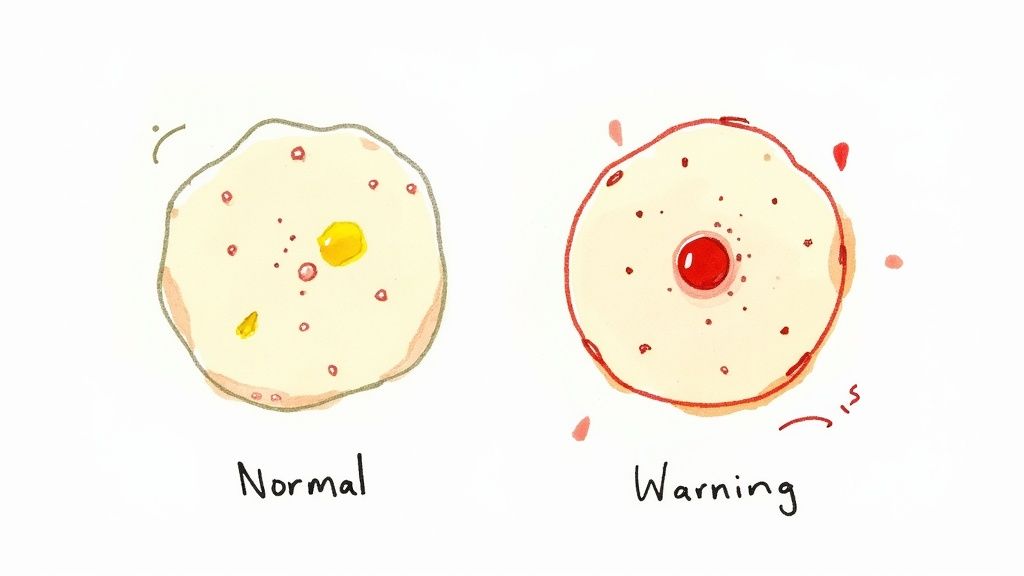
Most tattoos heal, especially when you follow the right aftercare steps. Your body is a pro at repairing skin. The trick is learning to read its signals, so you can tell the difference between a normal process and a problem.
A bit of redness, some swelling, and tenderness for a few days are part of the package. It is your body's response to the new ink. You can also expect some itching and peeling down the line; those are signs that your skin is regenerating.
The key is knowing which symptoms are red flags. Spotting them early helps you act fast, keeping both you and your new art safe.
Normal Healing vs. Potential Infection
Telling the difference between standard healing and a budding infection is the most important skill you can acquire during aftercare. Normal symptoms are mild and get better over time. Infection symptoms usually get worse and feel more intense.
It is normal to feel discomfort, but severe pain is a warning sign. A study looking at tattoo healing symptoms between 2004 and 2018 found that itchy tattoos were the most searched-for concern, followed by tattoo bumps and raised tattoos. It shows how common these worries are. You can find more details on these common tattoo healing symptoms on pubmed.ncbi.nlm.nih.gov.
The goal is to keep an eye out for any symptoms that seem excessive. This comparison should help you know what to look for.
Your body gives you clear signals. Mild irritation is part of the process, but persistent, severe symptoms require your immediate attention. Never ignore what your skin is trying to tell you.
Red Flags to Watch For
If you notice any of these signs, it is time to pay attention. These are not typical parts of the healing journey. They could point to an infection or another complication that needs addressing.
Excessive Swelling and Redness: Some swelling is expected for a few days, but if it spreads or gets worse after day three, that is a problem. The same goes for redness that expands far beyond the tattooed area.
Prolonged Pain: A new tattoo feels like a sunburn. If that pain becomes severe, starts throbbing, or increases after a couple of days, something is not right.
Pus or Foul-Smelling Discharge: Your tattoo will weep a bit of plasma and ink for the first day or two. A thick, cloudy, or green/yellow discharge (pus) is a classic sign of infection. Any bad odor is also a red flag.
Red Streaks: Thin red lines radiating out from your tattoo are a sign that an infection could be spreading. This requires immediate medical attention.
Fever or Chills: If you start to feel unwell, run a fever, or get the chills after your tattoo, it could mean your body is fighting a systemic infection. You should see a doctor right away.
When to Seek Help
Knowing who to call is as important as spotting the problem. Your response should match the severity of your symptoms. Acting quickly can prevent damage to both your health and your tattoo.
For minor concerns, your first point of contact should be your artist. They can tell you if what you are experiencing is normal. If you suspect an infection, do not wait. For a breakdown of what to do next, check our guide on what you should do if your tattoo gets infected.
If you see any signs of a serious infection, like pus, a foul smell, red streaks, or a fever, you need to contact a medical professional immediately. Your health comes first.
Frequently Asked Questions About Tattoo Healing
Even with the best aftercare guide, questions always come up during the healing process. We get it. This final section tackles some of the most common queries we hear from clients, so you can navigate those last stages with confidence.
Knowing what is normal makes all the difference. Let’s dive into the details that matter most.
When Can I Swim After Getting a Tattoo?
You must keep your new tattoo out of any standing water for at least two to four weeks. That means no pools, no hot tubs, no ocean dips, and no long baths. Think of your new tattoo as an open wound; soaking it is asking for a bacterial infection.
Pools and hot tubs contain chemicals, while lakes and oceans teem with microorganisms. Neither is good for healing skin and can mess up your new art. Short showers are fine; just let the water run over the tattoo indirectly.
Is It Normal for My New Tattoo to Peel?
Yes, one hundred percent. Peeling is a normal and expected part of the healing journey. It usually kicks in toward the end of the first week, marking the second stage of healing.
The top skin layer that was damaged during the tattoo process is flaking away to make room for the new layer growing over your ink. Do not pick at it, scratch it, or help the flakes along. Pulling them off can lift the ink out of your skin.
"Peeling is your body's way of shedding the old to protect the new. Let it happen naturally. Your patience during this itchy phase directly impacts the final quality of your tattoo."
How Soon Can I Get a Tattoo Touched Up?
Patience is key here. You need to wait until your tattoo is completely healed before thinking about a touch-up. While the surface might look healed in about a month, the deeper skin layers are still at work. Most artists recommend waiting a minimum of two to three months.
Some might suggest waiting up to six months. This gives the dermis enough time to regenerate so the ink can settle. Tattooing over skin that not finished healing can cause more trauma.
Why Does My Healed Tattoo Look Dull?
It is common for a new tattoo to look dull or cloudy during the third stage of healing, usually around weeks three and four. This temporary "milky" haze happens because a new, thin layer of epidermis is forming over the ink. It is not transparent yet.
Do not worry, this dullness is not permanent. As your skin continues its long-term healing over the next few months, that new layer will settle and its transparency will return. The vibrancy of your tattoo’s colors will shine through once this final healing stage wraps up.
Can I Exercise After Getting a New Tattoo?
Hitting the gym too soon can cause issues. Heavy workouts mean sweat, which can irritate an open wound and create a breeding ground for bacteria. The stretching and friction from movement can disrupt the healing process.
As a rule, you should wait at least 48 hours before doing any light physical activity. For more intense workouts, it is better to wait a week or more. We put together a guide on this, and you can learn more about when you can work out after getting a new tattoo here.
What Should I Do If My Tattoo Itches?
Itching is probably the most annoying part of healing a tattoo. It is a sign that your body is repairing itself. But you must resist the urge to scratch.
To get relief, try gently patting or tapping the area. A thin layer of your recommended fragrance-free moisturizer can also work wonders. Ultimately, keeping your new tattoo clean and properly moisturized is your best defense against the itch.
At We The Sinners Tattoo, we guide you through every step, from the first sketch to a lifetime of care for your art. Our artists in St. Paul’s Bay provide the expertise and support you need for a healed tattoo. Book your consultation today, and let’s bring your vision to life. https://wethesinnerstattoo.com
Article created using Outrank

Comments